
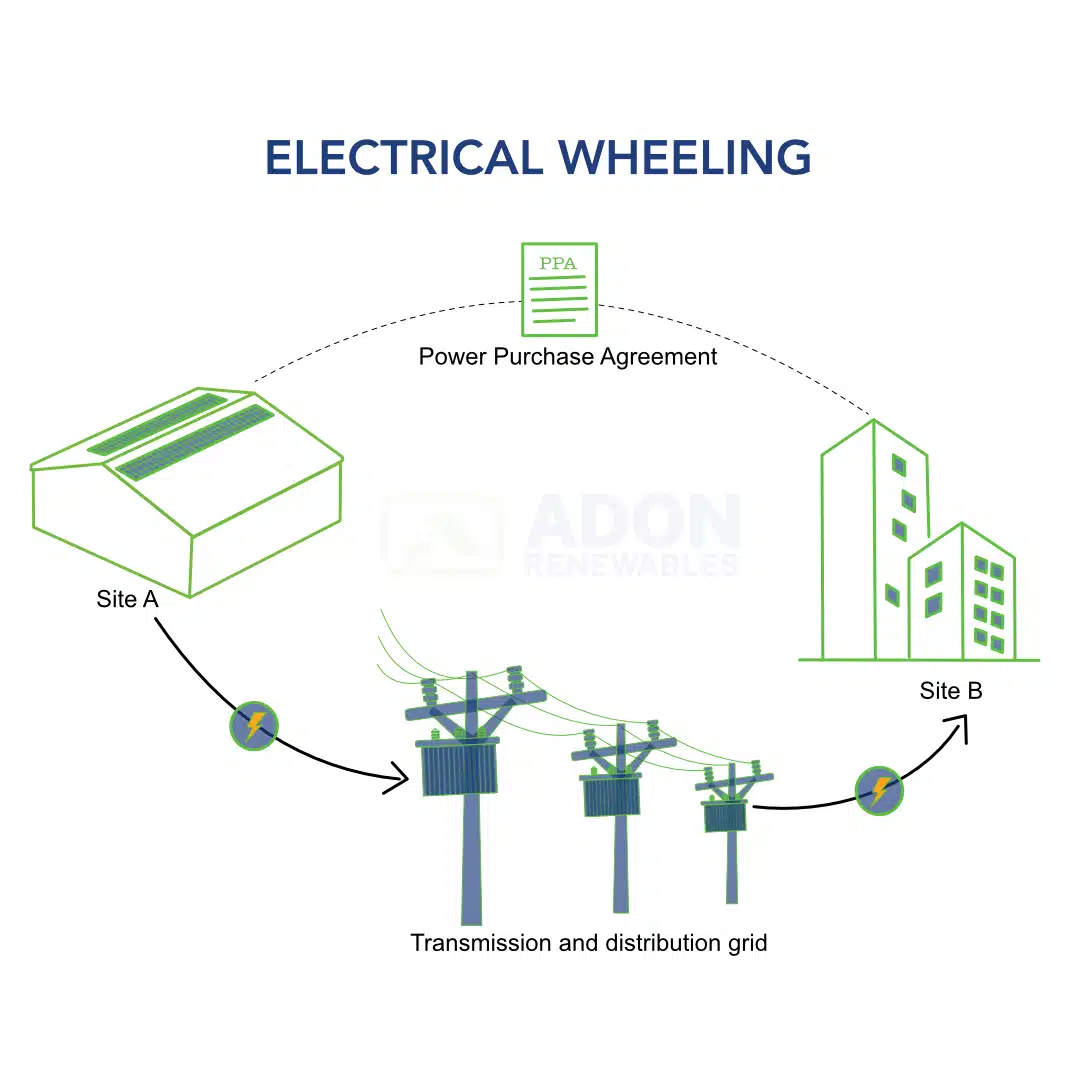
Hawaii’s electricity market is continuing to evolve, and a proposed policy known as “wheeling” could create new opportunities for commercial property owners, businesses, and renewable energy developers across the state.
For many organizations, especially those in dense urban areas with limited rooftop or parking space, onsite solar and battery storage may not always be practical. Hawaiʻi’s developing wheeling framework aims to address that challenge by allowing renewable electricity generated at one location to offset electricity usage at another location through the utility grid.
If finalized, this policy could expand access to lower-cost renewable energy without requiring customers to install or maintain energy equipment onsite.
What Is Wheeling?
In simple terms, wheeling allows renewable electricity generated at one site to be credited toward electricity usage at another site.
For example, a solar and battery storage project developed on one property could potentially serve a completely different commercial building elsewhere on the island using the existing utility grid infrastructure.
This creates a new pathway for businesses and property owners that:
- lack sufficient rooftop or land area for onsite solar,
- want to avoid major capital investment,
- or prefer not to operate and maintain energy equipment themselves.
Instead of hosting their own system onsite, qualifying customers may eventually be able to purchase renewable electricity generated remotely under a future wheeling arrangement.
Why This Matters for Commercial Properties
Electricity costs in Hawaiʻi remain among the highest in the nation, and many commercial properties continue to face rising operational expenses tied to energy usage and peak demand charges.
At the same time, many buildings encounter practical limitations when evaluating onsite renewable energy systems, such as:
- limited roof space,
- structural constraints,
- tenant occupancy considerations,
- or insufficient room for battery storage equipment.
Wheeling could help address these limitations by separating where renewable energy is generated from where it is consumed.
For commercial property owners and operators, this may create a future opportunity to:
- reduce a portion of electricity costs,
- access renewable energy without onsite construction,
- support sustainability goals,
- and participate in Hawaiʻi’s clean energy transition without directly owning energy infrastructure.
Current Status of the Policy
The wheeling framework is currently being developed through Hawaiʻi Public Utilities Commission Docket No. 2024-0200 under Act 266.
The proceeding includes:
- Track A: Development of a broader retail wheeling program for private customers
- Track B: Renewable energy sharing between state and county government facilities
The Hawaiʻi Public Utilities Commission is expected to finalize program rules and tariff structures by January 1, 2027.
While pricing structures and participation rules are still under development, the policy direction signals growing support for more flexible renewable energy models throughout the state.
A Growing Opportunity for Renewable Energy Development
As Hawaiʻi continues progressing toward its 100% renewable electricity goal by 2045, policies like wheeling may help accelerate deployment of distributed solar and battery storage projects while expanding renewable energy access to a broader range of customers.
For developers and infrastructure investors, this creates greater flexibility in project siting and customer participation. For commercial energy users, it may eventually provide another pathway to lower energy costs without requiring onsite solar deployment.
As the regulatory framework continues to take shape, wheeling could become an important part of Hawaiʻi’s next phase of clean energy development.