
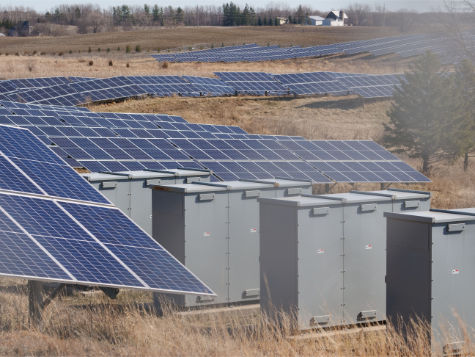
For decades, lithium-ion batteries have been the foundation of modern energy storage. They power everything from smartphones and laptops to electric vehicles and utility-scale battery energy storage systems (BESS).
But a new battery chemistry is gaining momentum.
Sodium-ion batteries, once considered a niche technology, have recently attracted significant investment from battery manufacturers, researchers, and energy companies around the world. As commercialization accelerates, many are asking whether sodium-ion batteries could reshape the future of energy storage.
Why the Interest in Sodium?
The biggest advantage of sodium is simple: it is abundant.
Unlike lithium, sodium is widely available and can be sourced from abundant materials. This creates the potential to diversify battery supply chains and reduce exposure to lithium price volatility.
Sodium-ion technology may also reduce reliance on certain critical minerals, depending on the specific battery chemistry used. However, sodium-ion batteries do not eliminate critical-mineral dependencies entirely; some commercially promising chemistries still use materials such as nickel or manganese.
As manufacturing scales, these characteristics could create opportunities for more cost-competitive battery storage. Researchers and industry analysts are particularly interested in sodium-ion technology for applications where energy density is less important than cost, supply-chain resilience, safety, and performance.
How Do Sodium-Ion Batteries Compare with Lithium-Ion?
While sodium-ion batteries share many fundamental principles with lithium-ion batteries, they are not designed to outperform lithium in every application.
Advantages
Potential benefits include:
- Abundant and widely available sodium resources
- Potential for greater upstream supply-chain diversification
- Strong low-temperature performance
- Potentially lower reliance on certain critical minerals
- Promising characteristics for stationary energy storage
One of the most notable advantages of sodium-ion batteries is their performance in extreme temperatures. According to the International Energy Agency, the latest generation of sodium-ion batteries can retain around 90% of their nominal capacity at temperatures as low as −40°C and can operate at temperatures as high as 70°C, giving the technology a potential advantage in particularly harsh and variable environments.
These characteristics make sodium-ion batteries particularly attractive for applications where physical size and weight are less important than cost, reliability, and operating performance.
Current Limitations
The primary challenge remains energy density.
For applications such as long-range electric vehicles, where maximizing driving distance is critical, lithium-ion technologies therefore maintain an advantage.
In addition, while sodium-ion technology is progressing rapidly, manufacturing capacity, supply chains, and long-term field experience are still developing compared with the mature lithium-ion industry. Nearly all current sodium-ion manufacturing capacity is concentrated in China, highlighting that supply-chain diversification remains a longer-term opportunity rather than an immediate reality.
Why Stationary Energy Storage May Be the First Major Opportunity
For grid-scale battery storage, priorities differ from those of passenger vehicles.
Utilities and project developers often prioritize:
- Project cost
- Safety
- Cycle life
- Reliability
- Supply-chain security
- Overall system economics
In these applications, battery weight is far less important than it is in an electric vehicle.
This makes stationary energy storage one of the most promising potential applications for sodium-ion batteries. A recent review published in Batteries identifies grid-scale storage and renewable energy integration among the key areas where sodium-ion technology could play an important role as commercialization advances.
The International Energy Agency similarly notes that sodium-ion batteries are already showing potential in stationary storage, particularly in applications where cold-weather performance and reduced exposure to lithium-price volatility provide an advantage.
For renewable energy projects, this could eventually make sodium-ion batteries an additional option alongside established lithium-ion technologies.
Commercial Momentum Is Building
Perhaps the strongest signal that sodium-ion technology is moving beyond the laboratory is the level of commercial investment now taking place.
Battery manufacturers have announced plans for large-scale production, while companies are beginning to move sodium-ion technology into commercial applications. In 2026, CATL, the world’s largest battery manufacturer, announced commercial-scale deployment of its second-generation sodium-ion technology.
In April 2026, CATL also signed a major agreement to supply 60 GWh of sodium-ion batteries to Beijing HyperStrong Technology over three years. Reuters described the agreement as CATL’s first major sodium-ion deal for energy storage, marking an important step toward broader commercial deployment.
Although commercial deployment remains relatively small compared with lithium-ion batteries, these developments suggest that sodium-ion technology is entering an important new phase of commercialization. The IEA notes that global sodium-ion production remained below 1% of lithium-ion production in 2025, underscoring how early the technology remains despite its recent momentum.
Will Sodium Replace Lithium?
Probably not—at least not in the foreseeable future.
Instead, the industry increasingly appears to be moving toward a landscape where multiple battery chemistries coexist, with each technology optimized for different applications.
Lithium-ion batteries are likely to remain the preferred solution for applications requiring high energy density, including long-range electric vehicles and portable electronics.
Sodium-ion batteries may become a compelling alternative where affordability, supply-chain resilience, extreme-temperature performance, or other characteristics are more important than maximizing energy density.
Rather than replacing lithium, sodium may expand the range of battery technologies available for different energy needs.
Looking Ahead
As renewable energy deployment continues to grow worldwide, so will the demand for reliable and affordable energy storage.
Whether sodium-ion batteries ultimately capture a small niche or become a major segment of the battery market remains to be seen. Much will depend on continued improvements in performance, manufacturing scale, supply-chain development, and cost competitiveness.
What is clear, however, is that sodium-ion batteries are no longer simply an emerging research topic. They are becoming an increasingly important technology to watch as the energy storage industry looks for new ways to balance cost, performance, supply-chain resilience, and scalability.
For renewable energy developers and energy users, the emergence of sodium-ion technology could ultimately mean more options for matching battery chemistry to the specific requirements of a project.
Sources
- International Energy Agency (IEA). Sodium-ion battery momentum grows, but challenges remain (2026).
- Reuters. Chinese battery maker CATL signs first major sodium-ion deal for energy storage (2026).